How Do Property Managers Track Vendor Contracts?
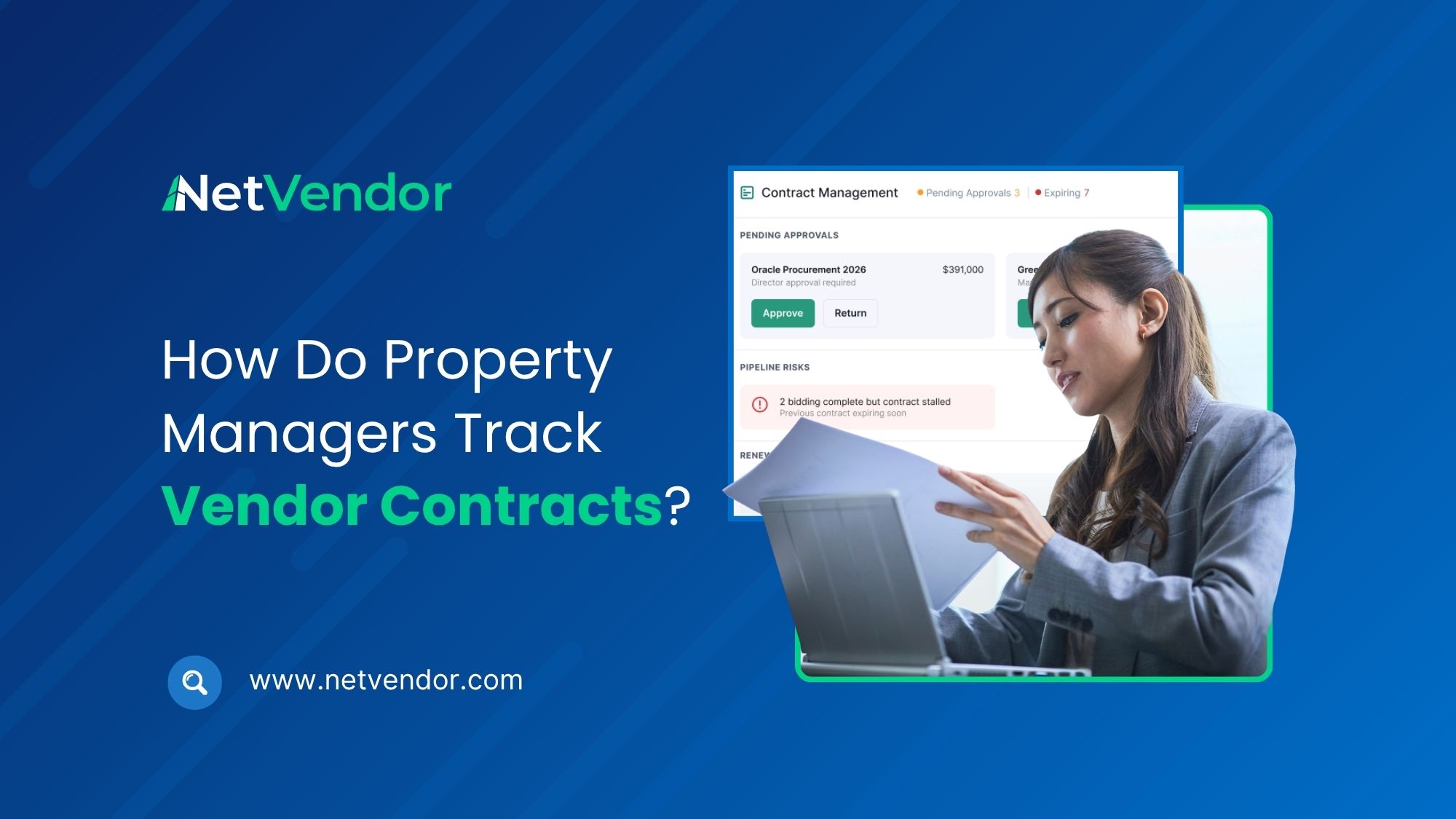
Most property managers track vendor contracts in one of three ways: spreadsheets and shared drives, a standalone contract repository, or contract tracking tied to each vendor's compliance status. All three can store an agreement. Only the third shows, in one place, whether the vendor behind each agreement still meets requirements.
The difference shows up at portfolio scale, when hundreds of agreements renew on different dates across different properties and ownership groups, and one missed notice window means a contract renews before anyone has reviewed the terms, the price, or the vendor.
For operations and procurement leaders, the real question is not where contracts are stored. It is whether anyone can see, at any moment, which agreements are active, which are about to renew, who approved them, and whether the vendor on the other side still meets your requirements.
Wondering how many of your vendor contracts will renew before anyone reviews them? Schedule a demo to see what portfolio-wide contract visibility looks like in practice.
What Is Vendor Contract Tracking?
Vendor contract tracking is the practice of keeping a central, up-to-date record of every vendor agreement across a portfolio: its status, execution, expiration, and renewal dates, renewal type, notice window, approvers, and the signed version of record. Effective tracking turns each renewal into a scheduled decision rather than a date someone has to remember.
In property management, contract tracking also has a compliance dimension. Most trackers record contract renewal dates and insurance expiration separately, so a contract can stay active, or even renew, after the vendor's coverage has lapsed. NetVendor keeps contracts in the same system that verifies vendor compliance, so it tracks each agreement's expiration date and the vendor's compliance status side by side, and only compliant, verified vendors can sign.
Three Ways Property Managers Track Vendor Contracts
Each method solves a different problem, and each one reaches a limit as the number of properties, owners, and vendors grows.
Most teams start with spreadsheets, move to a repository when volume becomes unmanageable, and connect contracts to compliance only after an audit or an uninsured incident exposes the gap. Contract tracking is one piece of a broader property management procurement strategy that also covers how vendors are sourced, bid, and approved. This is the stage where procurement decisions either hold up over the life of the agreement or drift out of view.

Why Vendor Contract Tracking Breaks Down Across a Portfolio
Vendor contract tracking breaks down across a portfolio for four reasons: ownership groups set different terms and approval thresholds, properties sign agreements outside the central record, contract data and signed versions live in disconnected systems, and rebids start too late because bidding runs separately. Each gap repeats at every site.
Ownership groups rarely share one standard. Each may set its own approval thresholds, contract terms, and insurance requirements, so a single tracking spreadsheet either flattens those differences or splits into dozens of versions nobody reconciles.
Contracting also happens at the edges. Properties without approval authority sign service agreements to keep work moving, and those contracts never reach the central record. Leadership ends up with hidden contracts it does not know exist until an invoice, a dispute, or an auditor surfaces them.
Then there is the question of which version counts. Fragmentation is common across industries: World Commerce & Contracting found that contract-related data is scattered across an average of 24 different systems. When drafts and redlines travel by email, Legal cannot confirm which version was executed, what changed between drafts, or where the signed copy lives. And because bidding usually runs in a separate process, rebids start too late to be competitive, if they start at all.
What Happens When a Vendor Contract Expires or Auto-Renews Unnoticed?
When a vendor contract expires or auto-renews without review, the property loses its window to renegotiate, rebid, or exit, and may keep paying a vendor under terms or coverage nobody has confirmed. The consequences tend to show up in four places:
- Spend is locked in before anyone reviews it. An auto-renewal clause extends the old price and scope for another term, with no competitive rebid and no exit.
- Vendors keep working under expired agreements. Work continues after the contract lapses, leaving the property without current terms to rely on if something goes wrong.
- Renewals go to non-compliant vendors. A contract renews on schedule even though the vendor's insurance or license expired months earlier, extending a liability exposure into a new term.
- There is no clear answer when ownership asks. Without a record of who approved what, and when, the team reconstructs history from inboxes instead of producing a clean audit trail.
World Commerce & Contracting research puts average contract value erosion at 8.6%: the typical agreement delivers that much less than expected because of missed entitlements, invoicing errors, scope disputes, and cost overruns. The research spans industries, but the pattern applies to any portfolio carrying hundreds of service agreements.
Schedule a demo with NetVendor and see where every contract stands, from pending approval to expiration.

How to Track Vendor Contract Renewals Across Multiple Properties
Tracking renewals at portfolio scale comes down to six practices, applied the same way at every property.
- Centralize every agreement with a clear status. Bring contracts out of inboxes, drives, and site files into one repository where each agreement shows as pending, active, or expired.
- Capture the dates that drive decisions. Record the term, renewal type (automatic or manual), and the notice window for non-renewal, not just the expiration date.
- Make auto-renewal a decision, not a default. Set alerts early enough to cover the notice window plus a full rebid cycle. Before deciding to renew, rebid, renegotiate, or exit, review the vendor's performance against the contract's service levels and compare invoices to the contracted pricing.
- Route approvals by value, vendor type, or ownership group. Define who signs off on which agreements so site-level contracting no longer bypasses oversight.
- Confirm vendor compliance before signature and renewal. A contract should not move forward with a vendor whose insurance or license has lapsed. In NetVendor, only compliant, verified vendors can sign a contract, and each vendor's compliance status is tracked alongside its contract dates, so a lapse is visible before a renewal decision is due. Compliance requirements are configured by owner, property, and vendor type, so the check reflects what each ownership group actually requires.
- Keep one timestamped audit trail. Log every approval, signature, and change, and treat the executed PDF as the contract of record.
Every contract record should capture the same fields, regardless of property or ownership group:
Vendor Contract Tracking vs. Contract Governance
Contract tracking tells you what exists and when it ends. Contract governance determines what is allowed to happen. A calendar-based tool can remind someone that a contract expires in 30 days; it cannot tell you whether the vendor on that contract still meets your requirements.
NetVendor built its platform on Compliance-Led Vendor Management, where a vendor's compliance status is the control point for every governed action: bid award, contract signature, and payment. Requirements are set once by owner, property, and vendor type, then enforced automatically, so governance does not depend on someone remembering to check.
The same backbone connects contracts to bidding. In NetVendor, awarding a bid creates a contract pre-filled with the winning bid's details for the team to review, so the agreement starts with the same compliant vendor that was vetted for the bid, and the bid, approvals, and contract sit in one record.

What to Look for in Software That Manages Vendor Contracts and Renewals
Vendor contract management for property management needs to do more than store documents. When evaluating software that manages vendor contracts and renewals, look for:
- A portfolio-wide repository with every contract's status visible across properties and ownership groups.
- Renewal alerts with enough lead time to cover the notice window and a full rebid.
- Configurable approval routing by role, named approver, or dollar value, with a defined signing order.
- Compliance status alongside every contract, with a signature check to prevent agreements from being executed with a non-compliant vendor.
- Version history and an audit log that show what was signed, what changed, and who approved it.
- In-platform review and eSignature, so agreements are not chased through email attachments.
NetVendor manages vendor contracts and renewals inside the same system that verifies vendor compliance. Cascading renewal alerts at 120, 90, and 60 days leave time to cover the notice window and a full rebid. Contracts route through multiple approval levels by role, named approver, or dollar value, and only compliant, verified vendors can sign. When contracts are bulk imported, AI extracts the vendor, contract value, dates, billing frequency, and properties for the team to review against the source PDF before import.
Vendor Contract Tracking FAQ
How far in advance should property managers start tracking a vendor contract renewal?
Start tracking a renewal early enough to cover the contract's notice window plus the time a competitive rebid takes. For a contract with a 60-day non-renewal notice and a four-week bid cycle, that means acting at least three months out. Alerts set only to the expiration date usually arrive after the decision has already been made.
Can a spreadsheet work for vendor contract tracking?
A spreadsheet can work for a single property with a short vendor list and one person keeping it current. It breaks down across a portfolio because dates go stale, signed versions live elsewhere, site-level agreements never get logged, and nothing connects the contract to whether the vendor is still insured and licensed.
What's the difference between vendor contract tracking and vendor contract management?
Vendor contract tracking records which agreements exist, their status, and when they renew. Vendor contract management adds control over the full lifecycle: approval routing, signature, version history, renewal decisions, and rebids. In property management, it also means confirming the vendor still meets compliance requirements before signing or renewing an agreement.
Should a vendor contract be renewed if the vendor's insurance has lapsed?
No. Renewing with an uninsured vendor extends a liability exposure into a new contract term. Wait to renew until the vendor provides current coverage that meets your requirements. In NetVendor, each vendor's compliance status is tracked alongside its contract expiration dates, so a lapse is visible before the renewal decision is due.
Who should own vendor contract tracking in a property management company?
Ownership usually sits with operations or procurement, with approvals routed to regional leaders, asset managers, or owners based on contract value. Legal or a contract manager typically owns the executed version of record. What matters most is that one system holds the record, so accountability does not depend on who happens to keep the file.
Choosing How to Track Vendor Contracts at Portfolio Scale
The right tracking method depends on scale. A spreadsheet can serve one property; a repository can organize documents. Across a portfolio, the method that holds up is the one that makes every renewal a deliberate decision and connects each contract to the compliance status of the vendor who signed it. NetVendor applies Compliance-Led Vendor Management to contracts: every vendor contract is signed by a compliant, verified vendor, and it records approvals, versions, expiration dates, and the vendor's compliance status in one auditable system. If your team is still learning about renewals after they happen, the next step is to schedule a demo and see every agreement across your portfolio before it renews.
Download the State of Vendor Management report
Download our report for a broader view of how compliance-driven vendor management is evolving across portfolios.

.png)
Vannessa Rhoades is Content Marketing Manager at NetVendor, where she leads content strategy on vendor management, compliance, and risk for property management operators. She brings 25+ years of experience translating complex, technical subjects into clear, decision-useful guidance for the people who run real estate portfolios.