How to Find Reliable Contractors for Your Self-Storage Facilities
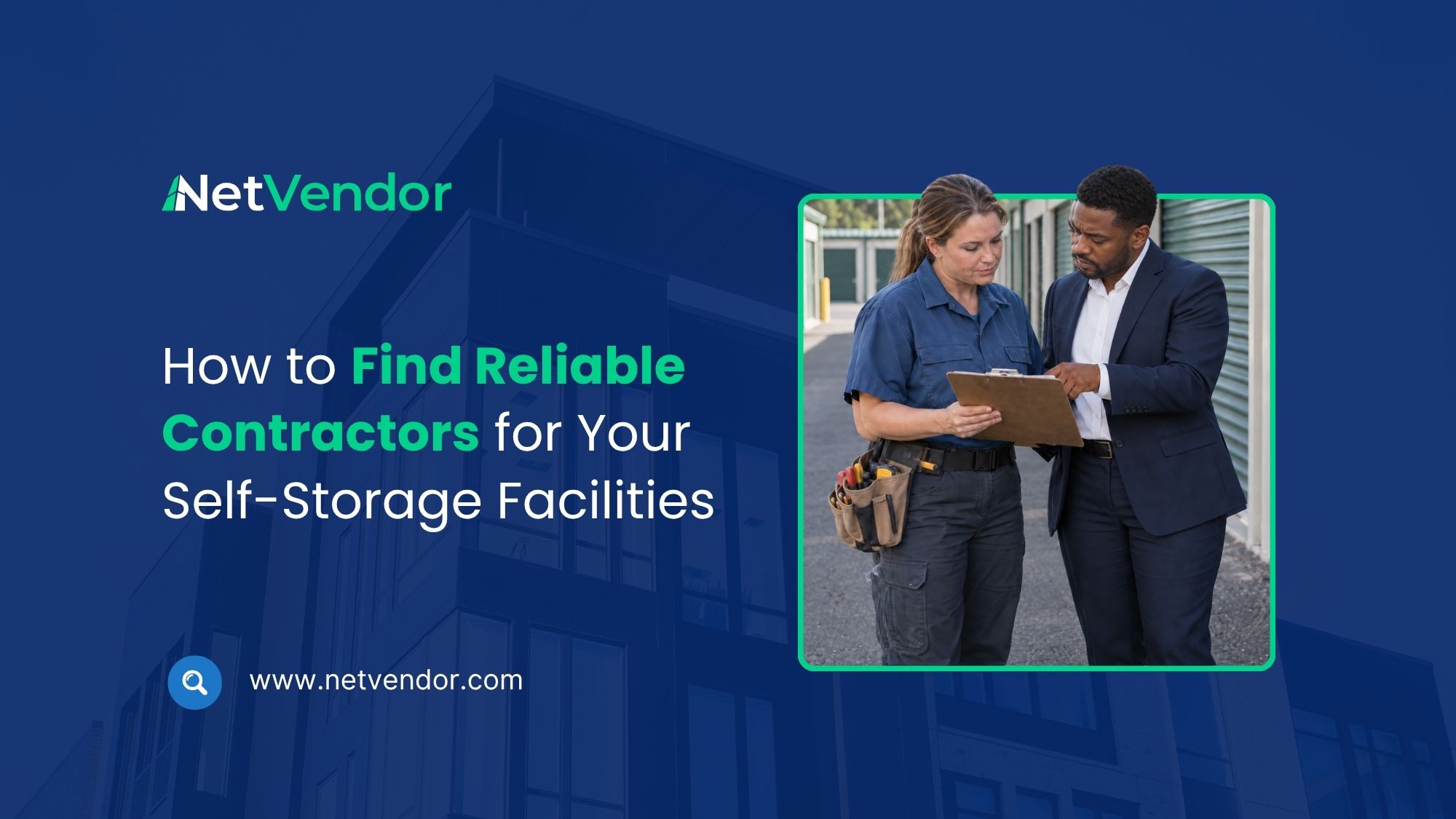
When a gate motor fails before opening or a roof starts leaking over a row of climate-controlled units, most self-storage teams find help the same way: a quick search, a scan of online reviews, and a call to whoever the facility manager used last time. At a single facility, that works well enough. Across a growing portfolio, it turns into dozens of separate contractor lists living in individual managers' phones, inboxes, and spreadsheets.
Finding reliable contractors for self-storage facilities takes a repeatable process, not a better search. Map the trades each facility needs, start with the service providers your managers already trust, and widen the pool when local referrals run out. Then set your requirements up front, confirm every contractor meets them before awarding work, and keep it all in one shared record.
Looking for a more consistent way to find and approve contractors across your facilities? Download the Procurement Leader's Guide to Vendor Compliance to see how growing operators standardize the process from the first call.
What Makes a Contractor "Reliable" for a Self-Storage Facility?
A reliable contractor for a self-storage facility is one who serves your market, has experience with storage-specific systems like gates, roll-up doors, and climate control, responds within the timelines your operation depends on, and can meet your insurance and documentation requirements before starting paid work at any location.
A five-star rating doesn't cover all four. Reviews tell you how a contractor treated past customers, but not whether they handle commercial facility work, cover your other markets, or can produce the paperwork your company requires. Each common sourcing channel covers some of that ground but leaves some open.
How to Find Contractors for Self-Storage Facilities, Step by Step
These six steps give operators a consistent way to find contractors across every facility they manage.
- Map the trades each facility needs, by market. List the recurring and emergency trades for every location, then group them by market. This shows where one contractor can cover several facilities and where you have no coverage at all, and it's the foundation for managing vendors across a storage portfolio instead of facility by facility.
- Start with the contractors your managers already use. Your facility managers already have working relationships with local contractors, and many of them are good. Collecting those names in one place is the fastest way to see who you already rely on and where the gaps are.
- Widen the pool beyond local referrals. Referrals only reach as far as the people you know. Vendor networks and platforms give operators a much larger pool to search, which matters most when you enter a new market or lose a longtime contractor.
- Set your requirements before you reach out. Decide what every contractor must provide before the first conversation. Proof of insurance, a W-9, and any required trade licenses are the core documents self-storage vendors need to provide, and setting them up front keeps every facility working from the same list.
- Confirm each contractor meets your requirements before awarding work. Finding a contractor and approving one are separate steps. The process for vetting a new contractor should happen before anyone is awarded a job or paid, not after.
- Keep one shared record, not a list for each manager. Store every contractor, their trades, the markets they serve, and their documents in one place the whole team can see. When a manager changes roles or a new facility joins the portfolio, the knowledge stays with the company.

The Contractors Self-Storage Facilities Rely On Most
Self-storage facilities depend on a specific set of trades, several of which are unique to storage. The core list for most operators includes:
- Gate and access control: Keypads, gate motors, and access systems are what customers interact with first, so downtime is visible immediately.
- Roll-up doors: Unit doors take constant wear, and repair volume grows with the number of facilities.
- HVAC: Climate-controlled units depend on consistent temperature and humidity control.
- Roofing: Leaks put stored belongings at risk, which makes response time critical.
- Paving and lot maintenance: Drive aisles carry moving trucks and trailers every day.
- Electrical and lighting: Lighting affects both security and how safe customers feel after dark.
- Pest control: Recurring service keeps units and common areas protected.
- Cleanouts: Clearing abandoned or auctioned units is a recurring, storage-specific need.
Each of these services needs coverage in every market you operate in, which is where a single manager's contact list falls short.
Why Finding Contractors Gets Harder as Your Portfolio Grows
Most of the self-storage industry operates outside of real estate investment trusts (REITs). According to TractIQ's 2026 analysis of more than 68,000 operating U.S. self-storage facilities, independently managed facilities account for 65.7% of facilities, while REIT brands manage 16.3%. In conversations with independent operators, many describe running vendor relationships without a dedicated facilities or procurement team.
In that setup, contractor sourcing usually falls to whoever is closest to the problem.
"Most operators I talk to tell me the same thing: each property manager handles their own vendors, because she knows them. That works until the company grows, or that manager moves on," said Brian Ball, Senior Account Executive, NetVendor.
Growth adds pressure in a few predictable ways. Acquisitions bring facilities in markets where nobody on the team knows a single contractor. Manager turnover takes years of contractor relationships out the door. A shared spreadsheet starts strong, then falls out of date because nobody owns it. None of these are failures on anyone's part. They're the administrative weight that builds up when a process designed for one facility has to serve twenty, fifty, or more.
Adding facilities faster than your contractor list can keep up? The Procurement Leader's Guide to Vendor Compliance walks through how operators build one consistent sourcing and approval process across every location.
Finding a Contractor vs. Confirming They Can Work for You
Finding a contractor answers "who can do this job?" Confirming answers "is this contractor eligible to do work for us?" Operators often treat them as one step, but they rely on different information and happen at different times.
A contractor showing up in a search, a referral, or a vendor network is a starting point, not an approval. When those two steps live in different places, like a Google search on one side and a spreadsheet of certificates on the other, the gap between them is where out-of-date insurance and missing paperwork slip through.

How NetVendor Connects Finding and Approving Contractors
NetVendor is built on Compliance-Led Vendor Management, an approach where a vendor's compliance status controls what they can do, not a check that happens after the fact. For self-storage operators, that means finding a contractor and confirming they can work for you happen in the same system instead of across search results, inboxes, and spreadsheets.
In practice, that looks like three things working together:
- A larger pool to search. NetVendor gives operators access to an ecosystem of 275K+ vendors from one place, instead of starting a new search in every market. Managers can search by service category, location (radius with mileage), and compliance status, as well as Advanced filters - you can also search by certifications, property type, and more.
- Requirements set once and applied everywhere. Operators configure compliance requirements by owner, property, and vendor type. They're set once at headquarters and enforced automatically, so a roofer and a pest control provider can have different requirements without each facility manager having to track the difference.
- Less paperwork for your team. NetVendor collects and verifies vendor documents, sends expiration reminders, and contacts insurance agents directly for certificates, so managers aren't chasing COIs one email at a time. Vendors that don't meet requirements can't be awarded a bid, have a contract renewed, or get paid until they do.
The result is that every contractor your team finds is measured against the same standard before a bid is awarded, a contract is renewed, or an invoice is paid, no matter which facility found them.
Finding Self-Storage Contractors FAQ
How do self-storage operators find contractors in a new market?
Most operators start by asking contractors they already use whether they serve the new market, then ask local facility staff and peer operators for referrals. When those sources come up short, a vendor platform with a larger searchable pool helps fill gaps quickly. Still confirm every new contractor against your requirements before work begins.
Should each facility manager choose their own contractors?
Facility managers often know the best local contractors, so their input is valuable. The risk is keeping that knowledge only in their heads. A better approach lets managers recommend contractors while the company keeps one shared record and one set of requirements, so every facility works from the same standard.
What should you ask a contractor before hiring them for a storage facility?
Ask which markets they serve, whether they have experience with storage-specific systems like gates and roll-up doors, and what their typical response time is for urgent repairs. Then request proof of insurance, a W-9, and any required licenses so you can confirm they meet your requirements before awarding work.
Is every contractor in a vendor network already approved to work at my facilities?
No. Being listed in a vendor network or platform means a contractor is available to find, not that they meet your company's requirements. Each contractor still needs to provide the documentation you require, and you should confirm compliance before awarding work or paying for a job at your facilities.
Should self-storage operators hire individual contractors or a facilities maintenance company?
It depends on portfolio size and how much coordination your team can handle. Individual contractors often offer better local responsiveness and pricing, while a facilities maintenance company provides a single point of contact across markets. Many operators use a mix, and either way, every provider should meet the same documentation requirements.
Building a Reliable Contractor Bench Across Your Self-Storage Portfolio
Reliable contractors rarely come from a single great search. They come from a repeatable process: knowing which trades each facility needs, leveraging the relationships your managers already have, widening the pool when local referrals run out, and confirming every contractor meets your requirements before awarding work. Once that process lives in one shared record instead of a dozen separate lists, adding a facility or replacing a contractor stops being a scramble. That's the idea behind Compliance-Led Vendor Management, and it's how NetVendor works: vendors are found in one place and measured against requirements your company sets once, before awarding any work. If you're ready to build that process across your portfolio, the Procurement Leader's Guide to Vendor Compliance is a practical place to start.
Download the State of Vendor Management report
Download our report for a broader view of how compliance-driven vendor management is evolving across portfolios.

.png)
Vannessa Rhoades is Content Marketing Manager at NetVendor, where she leads content strategy on vendor management, compliance, and risk for property management operators. She brings 25+ years of experience translating complex, technical subjects into clear, decision-useful guidance for the people who run real estate portfolios.