Real Vendor Compliance. Not Just a COI Tracker.
AI screens every vendor, humans verify every credential, and compliance is enforced across your operations. Configured by owner, property, and vendor type. Never one-size-fits-all.
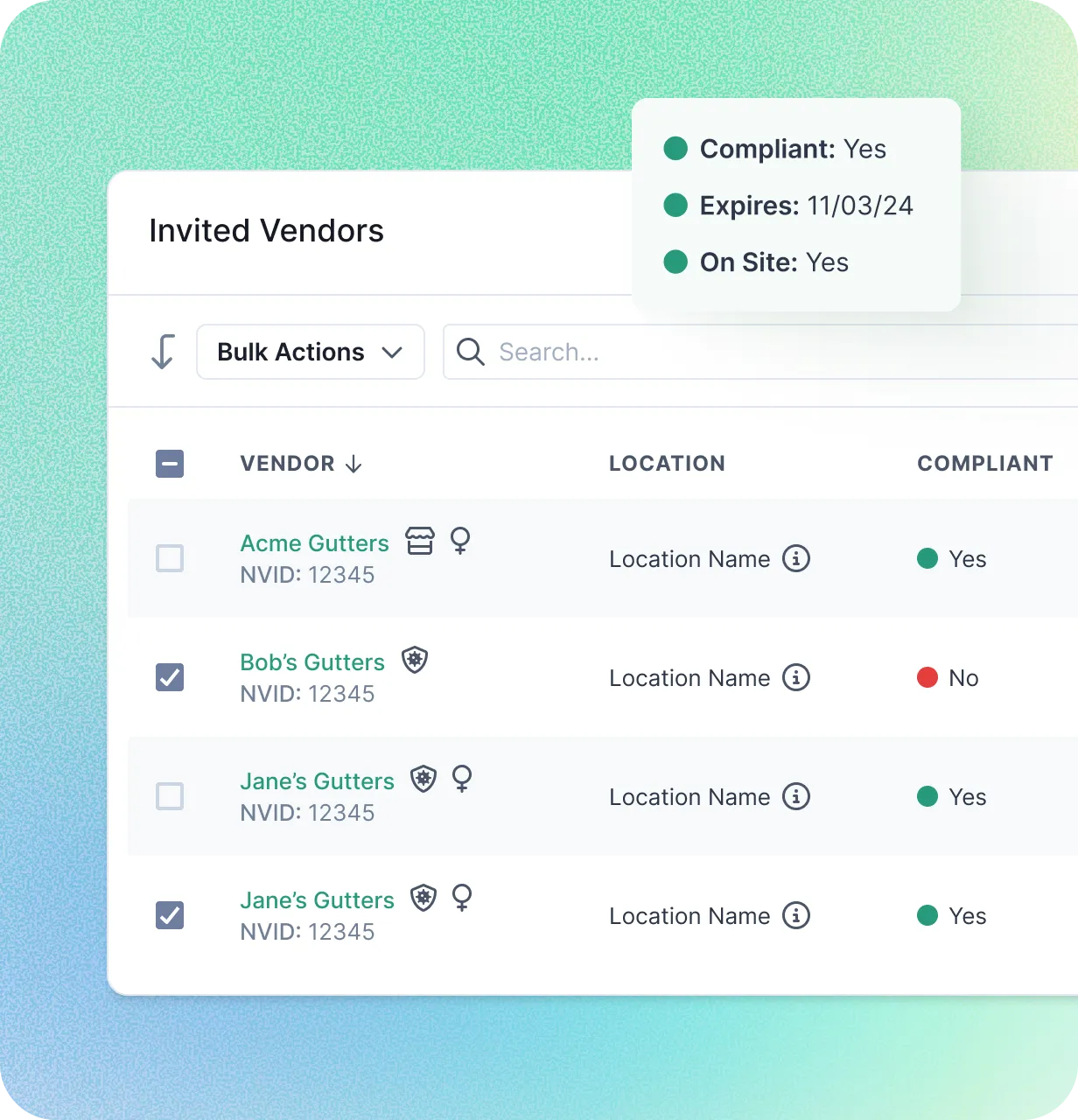

Comprehensive Credentialing.
Every Check. Every Vendor
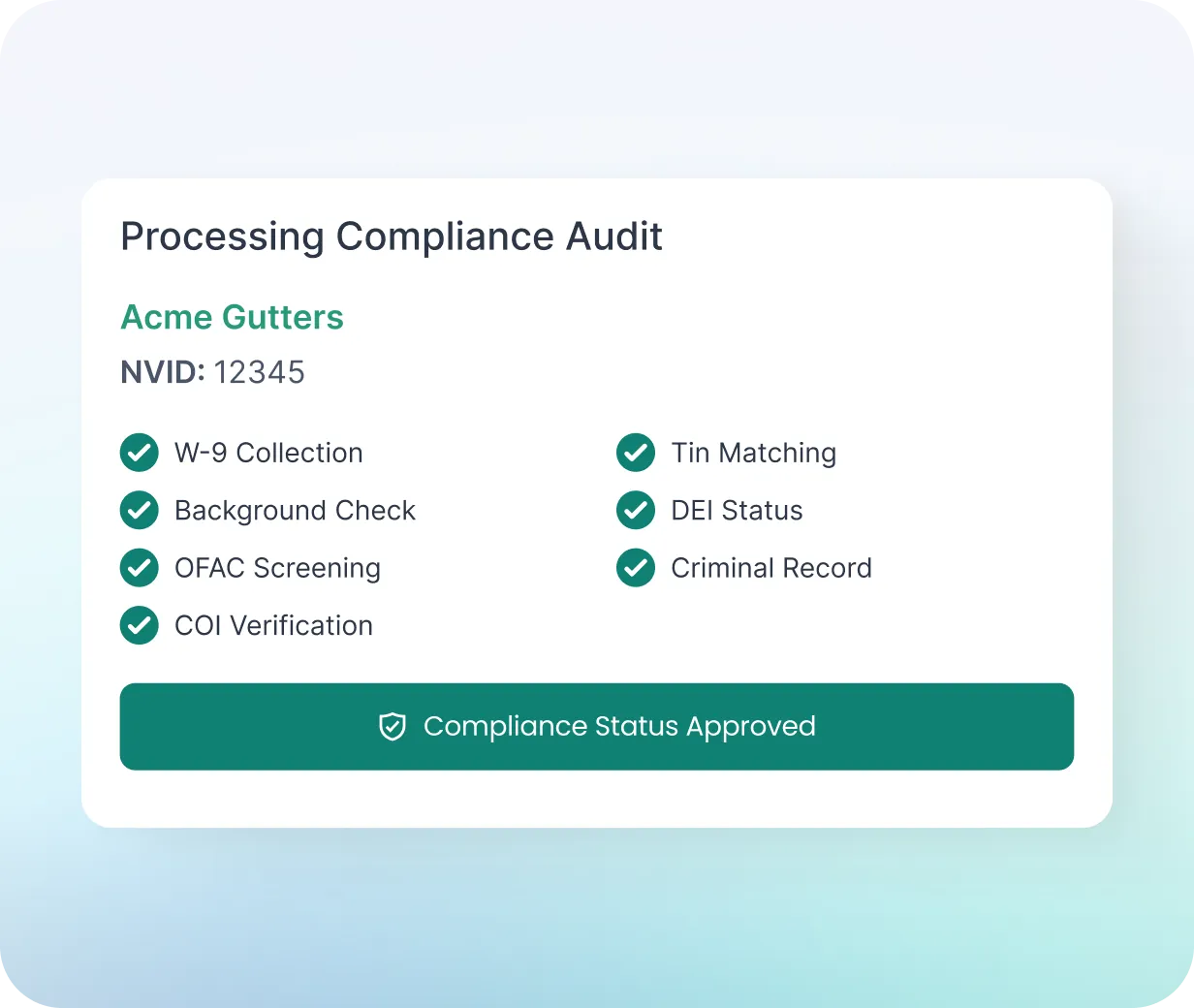
COI verification, background checks, OFAC screening, W-9 collection, TIN matching, DEI status. All verified before a vendor is approved to work, and monitored continuously after. Credentialing once and moving on isn't compliance. It's a gap.

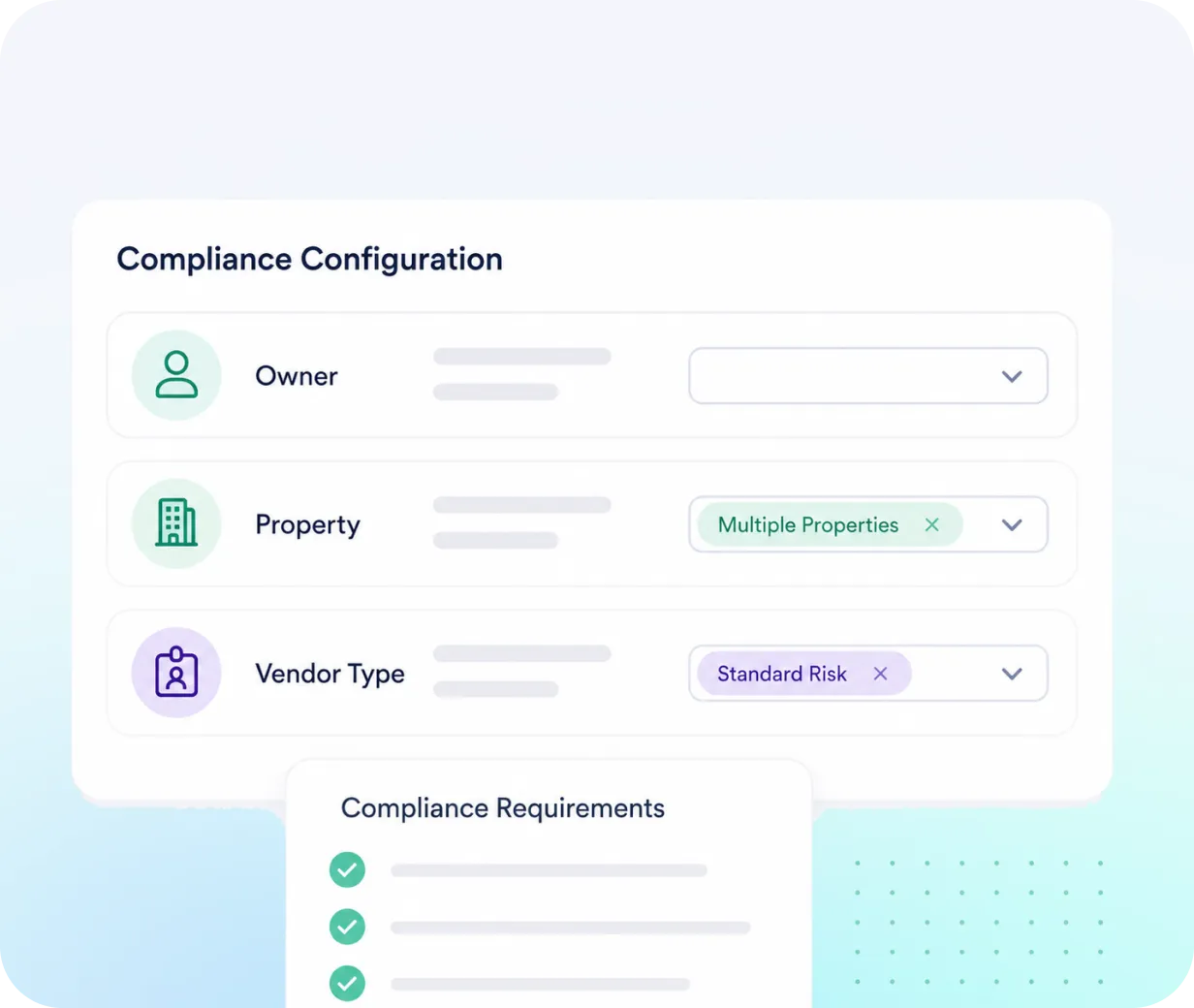
Every Owner Has Different Requirements. NetVendor Enforces All of Them.
Most compliance platforms apply one standard across your entire portfolio. NetVendor configures compliance requirements by owner, property, and vendor type, set once at the HQ level and enforced automatically everywhere else. The front line never has to think about
it again.
 Compliance models by ownership group
- No manual oversight
- Configured by property/vendor type
- Set once at HQ, enforced automatically
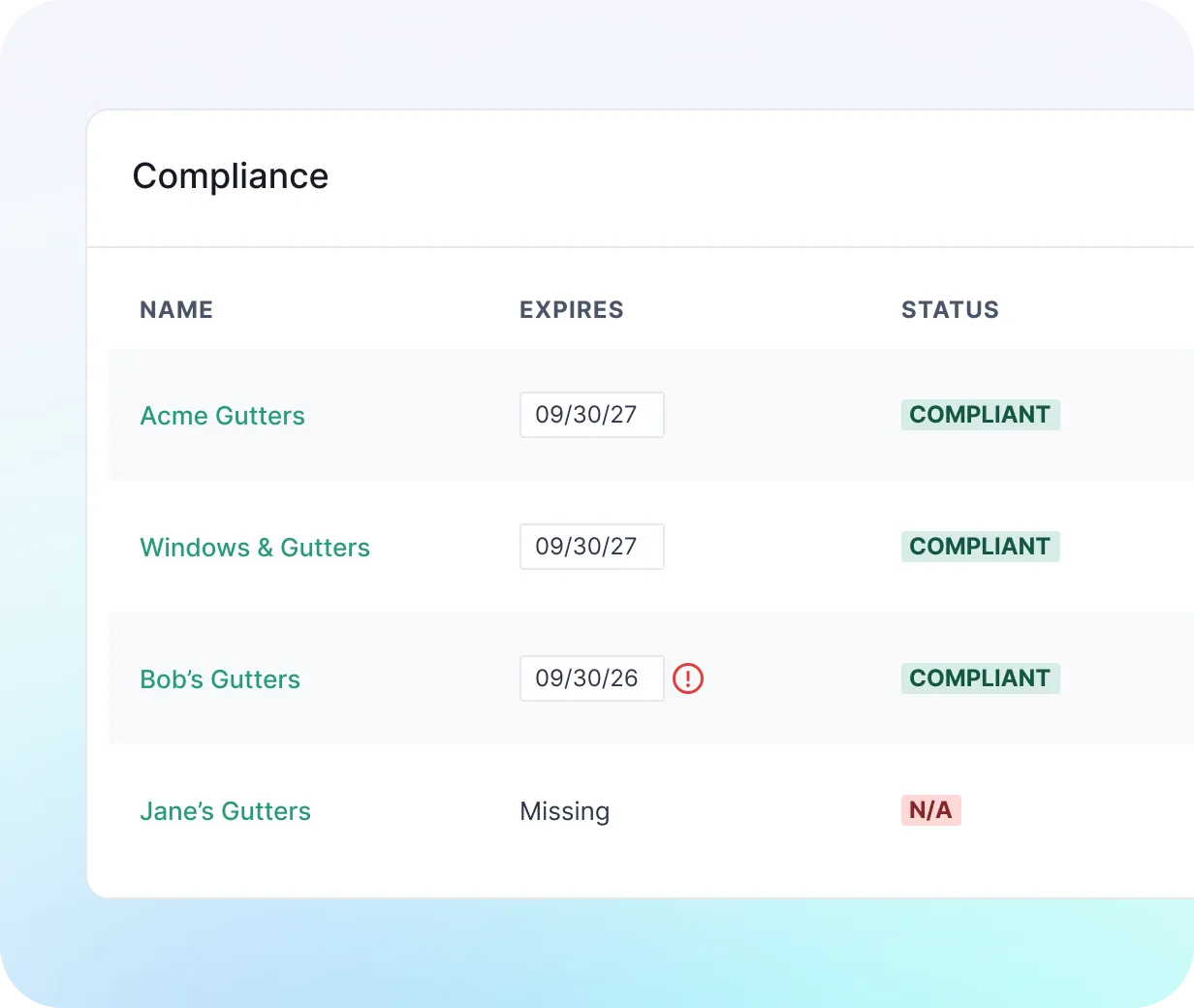
Continuous Compliance Monitoring
Approved once doesn’t mean approved now. Certificates expire and coverage lapses. NetVendor monitors compliance statuses so you never miss an expiration.

Automatic annual renewal and COI expiration notifications, beginning at 30 days (5 total notifications sent) to help ensure vendors maintain their compliance status.
Live compliance status across every vendor in your portfolio, visible at a glance.
Beyond the certificate.
Across the lifecycle.
Most platforms credential once and move on. NetVendor has compliance travel to every stage: sourcing, bidding, contracts. More Multifamily PMS Integrations Than Any Platform. When a vendor falls out of compliance, every connected system knows. Noncompliant vendors stopped at the PO and invoice stage. No manual checks. No missed flags.
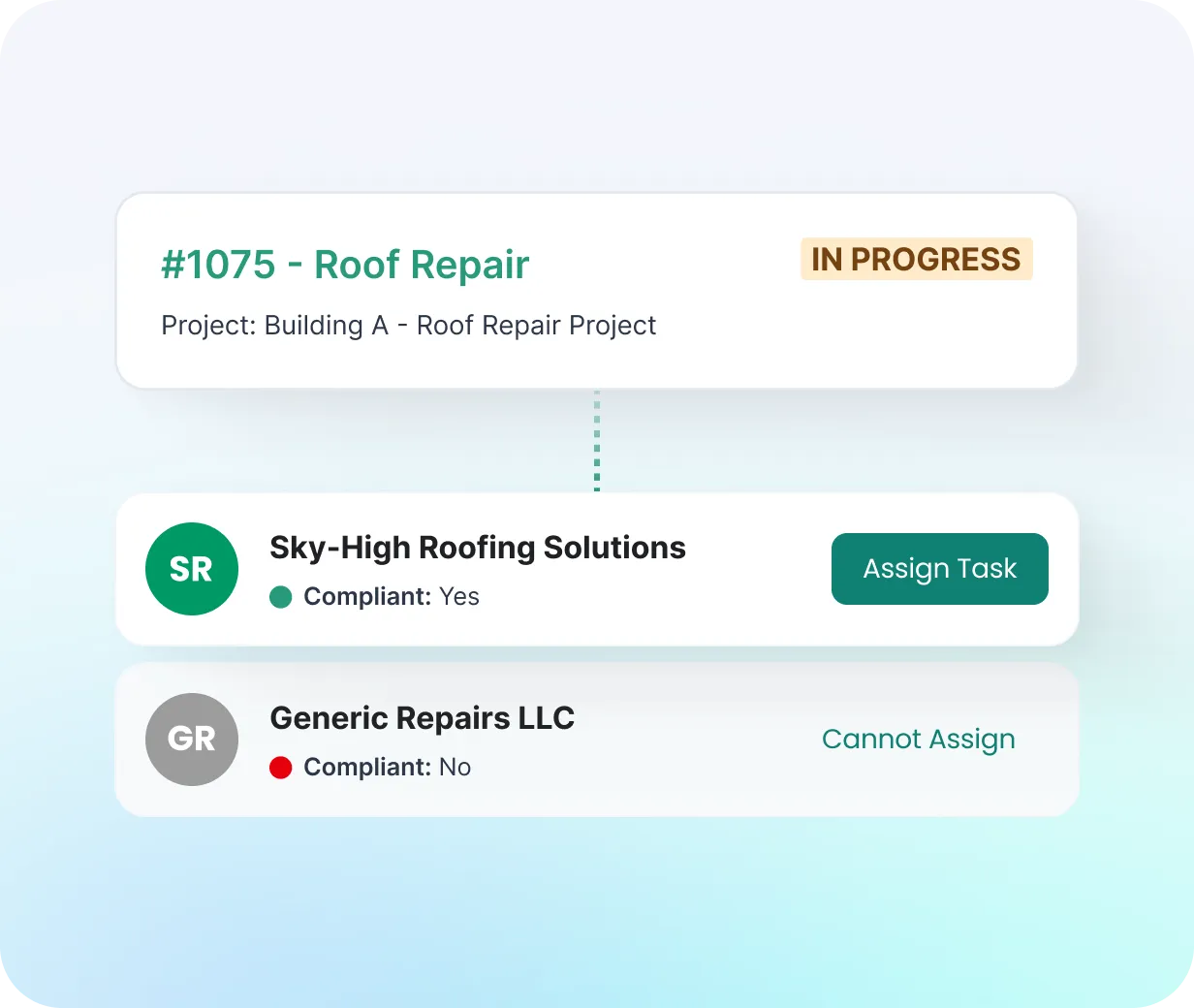
Compliance failures don't reach your properties
Non-compliant vendors are blocked automatically from bid awards and contract renewals. No manual checks. No missed flags.
“We knew immediately that NetVendor was the best fit. If a system doesn’t integrate easily, we don’t want it. NetVendor was our easiest integration, and it works flawlessly with Entrata.”

"The NetVendor and Entrata integration isn’t just helpful—it’s critical. It gives us visibility into vendor compliance while eliminating the hassle of switching between systems."

“Our vendors LOVE the app; so easy to use. Plus, it works offline. Before, we’d do an inspection, then lose all the data since the other app would glitch while connecting,”

“The big advantage of switching to NetVendor was the built-in messaging. You can notify residents, get feedback, and manage everything from one interface.”

“We’ve cut at least 25–50% of the time we used to spend managing turns and work orders. What used to take spreadsheets and constant follow-ups now just happens in the system.”

"The benefits of NetVendor go beyond the time savings and risk mitigation for your properties. It’s also extremely beneficial to your vendors... There is no downside."
"We are no longer afraid of taking on new vendors when we expand. NetVendor makes it easy—we send out invitations, and many vendors are already in the system. There’s no compliance hesitation."
Frequently Asked Questions
NetVendor verifies certificate of insurance (COI), W-9 and TIN matching, background checks, OFAC and terrorist watchlist screening, criminal and sex offender registry checks, and DEI status. Checks run through AI review with human verification before a vendor is approved to work, then continue on an ongoing basis.
Yes. NetVendor configures unlimited compliance models by owner, property, and vendor type, set once at the HQ level and enforced automatically everywhere else. The front line never manages exceptions manually. Most competing platforms only offer a small number of fixed tiers, not true per-owner configurability.
NetVendor flags the lapse and blocks that vendor from being awarded a bid, from being renewed on contract, or from being paid at the AP, PO, or invoice stage until coverage is restored. Automated renewal notices begin 30 days out, with five total notifications sent so vendors have time to act.
Not currently. Compliance is enforced at bid award, contract renewal, and payment; it does not yet gate whether a vendor can be assigned or dispatched to a work order. Property managers should confirm compliance status separately for time-sensitive dispatch decisions until this connection is built.
Every vendor's compliance record, checks performed, dates, and current status is stored centrally and exportable for ownership review or an insurance audit. NSA Storage found multiple compliance gaps during an audit that its prior manual process had entirely missed, and then moved to centralized, audit-ready records with NetVendor.
No. NetVendor's ecosystem includes 275K+ vendors, with 100K+ already credentialed. When a property manager invites an existing vendor, much of the compliance work is already done, which is why Berger Communities reported no compliance hesitation onboarding new vendors during a portfolio expansion.
Yes. NetVendor offers live bilingual support in English and Spanish, a level of vendor support no named competitor currently offers. NetVendor also contacts a vendor's insurance agent directly to resolve COI gaps, so vendors aren't left chasing their own paperwork to stay compliant.