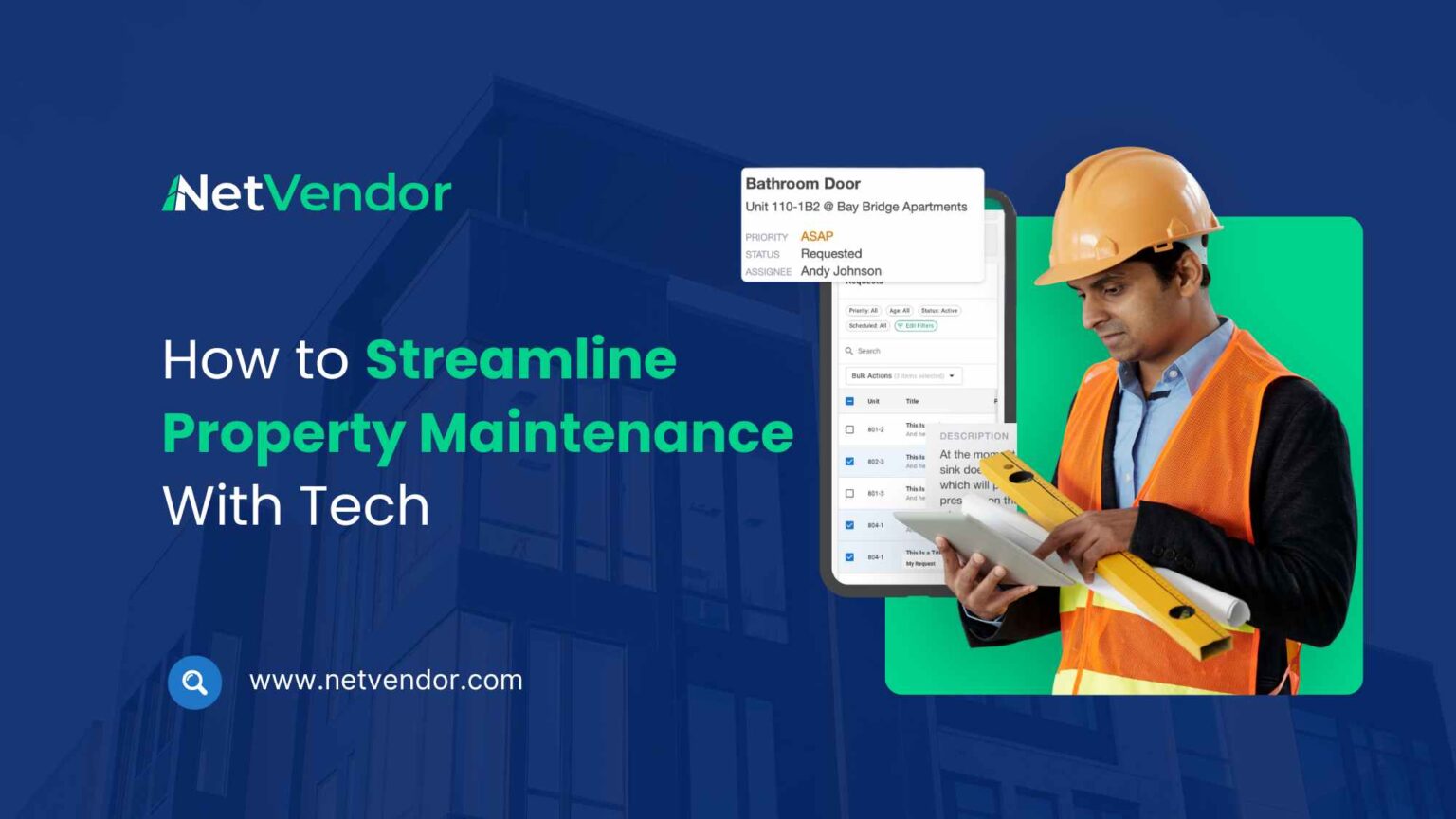
Maintenance operations are not isolated tasks. They are a core layer of vendor lifecycle control that directly impacts property performance, compliance exposure, and portfolio risk. When work orders stall, inspections pile up, and residents wait too long for service, efficiency and satisfaction suffer. Leading property management companies recognize that maintenance performance is driven by how well vendor workflows, compliance validation, and operational execution are controlled across the portfolio.
Across the industry, teams are implementing digital property inspections, centralized maintenance dashboards, and automated work order scheduling to eliminate delays and improve visibility. These tools help property teams move from reactive to proactive, delivering measurable gains in response time, resident satisfaction, and NOI (net operating income).
If your maintenance process still relies on spreadsheets, paper checklists, or outdated systems, you’re working harder than you need to. Smart property technology gives you the visibility, automation, and accountability to operate with confidence without adding headcount or complexity. Platforms like NetVendor enable this by connecting maintenance workflows with vendor compliance and lifecycle control across the portfolio.
See what modern maintenance looks like. Download The Smart Maintenance Playbook and learn 5 proven ways to digitize, automate, and optimize your maintenance operations.
In this article…

What Is Maintenance Technology in Property Management?
Maintenance technology is the system layer that manages work orders, inspections, vendor coordination, and performance tracking across a property portfolio. NetVendor unifies this layer with vendor compliance, acting as the system that controls vendor qualification, maintenance execution, and lifecycle risk across the portfolio.
The Maintenance Shift Happening Right Now
Today’s leading property management companies are modernizing maintenance. They’re replacing manual workflows with connected systems that link inspections, scheduling, and reporting in one place. Instead of juggling multiple tools or chasing down updates, teams can see and control the full maintenance lifecycle within the broader vendor lifecycle.
This shift is not just about efficiency. It is about preventing unverified vendors, missed insurance requirements, and inconsistent execution from entering the portfolio.
NetVendor brings all of this together by unifying maintenance execution with vendor qualification, compliance validation, and lifecycle control. This positions NetVendor as the control layer between vendor qualification and maintenance execution.
By combining digital inspections, real-time dashboards, and automated work order scheduling, they make it easier to track performance, close work orders faster, and standardize processes across the portfolio. The result is greater consistency, faster turns, and fewer surprises.
Why Maintenance Efficiency Is the New Performance Metric
Maintenance efficiency is not just an operational goal. It is a direct control point for portfolio risk, vendor accountability, and financial performance. Every delayed inspection or slow response affects resident satisfaction, retention, and overall property value. In today’s environment, maintenance efficiency directly impacts financial performance.
That’s why maintenance technology in property management has become mission-critical. By digitizing inspections, automating scheduling, and consolidating data into a single maintenance dashboard, property teams gain instant clarity into what’s working and what’s not. Without structured vendor oversight, faster maintenance can actually increase risk by accelerating work performed by unverified or non-compliant vendors.
With full visibility, regional and corporate leaders can monitor key metrics like average response time, work order backlog, and technician productivity. Meanwhile, maintenance staff and vendors can focus on completing tasks rather than chasing paperwork.
In short, digital maintenance tools help property managers make faster decisions, reduce risk, and deliver a better resident experience. But maintenance performance is ultimately determined by how well vendor execution is controlled across the lifecycle.

The Role of Maintenance Technology in Property Management
Maintenance technology has become the execution layer of vendor management, controlling how work is assigned, performed, and verified across the portfolio. When systems, vendors, and technicians are connected through a single platform, teams can move faster, communicate more effectively, and make smarter decisions across their portfolios. When this layer operates without compliance validation, it creates blind spots in vendor qualification, insurance coverage, and contractual adherence.
Modern maintenance technology in property management doesn’t just track work orders. It unites the full maintenance lifecycle. NetVendor digitizes the entire process while enforcing vendor qualification, compliance validation, and lifecycle control across every maintenance workflow. Every action is recorded, timestamped, and visible through an intuitive maintenance dashboard, giving leaders complete transparency into what’s happening at every property.
With deep PMS integrations, including Yardi, RealPage, AppFolio, and Entrata, NetVendor maintains system-level control over maintenance data, vendor activity, and compliance status while integrating directly with your property management system. That means no duplicate data entry, fewer errors, and faster access to insights that drive performance.
At the portfolio level, NetVendor functions as the control system that governs how vendor work is approved, executed, and validated across properties.
Use Digital Property Inspections To Prevent Costly Repairs
Small issues become expensive repairs and compliance risks when they go undocumented or unresolved. That’s why digital property inspections have quickly become a best practice for property management teams looking to reduce risk and improve consistency.
Digital inspections turn every walkthrough into actionable data. Instead of paper checklists that get lost or are inconsistently completed, digital inspection templates ensure the same standards are applied across all properties and technicians.
With NetVendor, property teams can standardize inspections while linking findings directly to controlled vendor workflows and compliance requirements.
This enables teams to:
- Identify recurring issues before they become emergencies.
- Track inspection completion rates and technician performance.
- Maintain audit-ready documentation for every property.
- Automatically convert inspection findings into work orders or follow-up tasks.
Without standardized inspections, properties also lose defensible audit trails, increasing exposure during insurance claims, disputes, and ownership reviews.
A real-world example comes from Horizon Realty Advisors, a student housing operator that partnered with NetVendor to digitize its maintenance processes. By standardizing inspections and automating follow-up tasks, Horizon’s teams improved visibility, shortened repair turnaround times, and reduced downtime across their portfolio.
When inspections are digital, they don’t just record problems. They prevent them.

Centralize Visibility With a Maintenance Dashboard
A maintenance dashboard functions as the operational control layer for maintenance execution and vendor performance. It serves as the command center for property operations, bringing together work orders, inspection results, technician performance, and vendor updates into one real-time view.
With NetVendor, teams can filter, track, and analyze activity by property, region, or vendor network while maintaining full visibility into vendor performance and compliance status.
Key benefits include:
- Real-time transparency: See open work orders and SLA progress.
- Portfolio visibility: Identify high-performing properties and address bottlenecks.
- Better decision-making: Use live data instead of static reports.
At the portfolio level, dashboards also expose vendor concentration risk, recurring compliance gaps, and performance inconsistencies across regions. Because the platform integrates with major PMS systems, updates sync automatically. Regional and corporate leaders get accurate, up-to-date data with no double entry required.
In the Horizon Realty Advisors case study, regional leaders described the dashboard as “a live view of maintenance performance across every property,” enabling them to manage proactively rather than reactively.
Automate Work Order Scheduling To Improve Responsiveness
Manual work order scheduling slows everything down. Managers spend valuable hours matching technicians to jobs, coordinating vendor availability, and managing resident updates. Without compliance integration, automation can unintentionally scale vendor risk by increasing job volume without validating vendor eligibility.
With NetVendor, automation removes manual coordination while ensuring that only approved, compliant vendors are assigned to work.
This allows maintenance workflows to:
- Flow directly from resident requests or inspections
- Automatically route tasks to the right vendor or technician
- Enable visual drag-and-drop make-ready prioritization
This automation helps property teams cut response times, reduce missed assignments, and maintain consistent communication with residents. When paired with mobile tools, technicians receive instant notifications, upload photos, and close tasks in real time.
Horizon Realty Advisors reported handling nearly double their usual workload during peak move-in season after automating scheduling without adding additional staff.
For property management companies, automated work order scheduling isn’t just about speed; it’s about scalability.

Integrate Maintenance and Compliance for Risk-Free Operations
Every maintenance operation depends on vendors, and each vendor poses a risk. This is where Compliance-Led Vendor Management becomes critical. Maintenance execution must be governed by vendor qualification, insurance validation, and approval workflows before work begins. NetVendor operationalizes this model by embedding compliance validation directly into maintenance workflows, preventing unapproved vendors from entering the portfolio.
That’s why integration between maintenance and compliance systems is essential. For maintenance leaders, vendor compliance serves as the control layer that determines vendor eligibility, validates insurance, and authorizes work across the portfolio.
NetVendor enforces vendor qualification, insurance validation, and approval controls before any work is assigned. This integration provides property management companies with a controlled workflow where risk is actively prevented, not just reduced: only compliant vendors can be scheduled for work. Other key benefits include:
- Automated COI tracking: Vendor insurance status is automatically verified and updated.
- Audit-ready documentation: All vendor records are centralized.
- Portfolio protection: Properties remain compliant with ownership and insurance requirements.
As part of NetVendor’s Source-to-Settlement lifecycle coverage, this integration ensures that maintenance efficiency never comes at the expense of compliance.
Why Maintenance Technology Fails Without Vendor Lifecycle Control
Maintenance technology improves speed and visibility, but without vendor lifecycle control, it introduces risk.
Without compliance integration:
• Work can be assigned to unverified vendors
• Insurance coverage may be missing or expired
• Vendor performance cannot be consistently enforced
• Audit trails become incomplete
This is why maintenance alone is not enough. Execution must be governed by a system that controls vendor qualification, compliance, and performance across the entire lifecycle.
NetVendor enforces this by ensuring that maintenance workflows cannot bypass compliance requirements, thereby creating a controlled environment in which speed does not introduce risk.
From Reactive to Reliable: Real-World Results
These results are not isolated improvements. They reflect what happens when maintenance execution is aligned with vendor lifecycle control at scale.
The transformation is already happening.
Horizon Realty Advisors digitized its maintenance workflows with NetVendor, standardizing inspections and automating work order management across its student housing properties. The result is faster service response, better vendor coordination, and measurable gains in resident satisfaction.
Berger Communities also modernized its operations with NetVendor, improving visibility into vendor compliance while reducing the administrative workload for maintenance teams. By unifying compliance and maintenance workflows, Berger increased confidence across regional teams and reduced downtime caused by manual follow-ups.
These stories show that digital maintenance transformation isn’t simply theoretical. It’s practical, proven, and scalable.
5 Steps To Build Your Smart Maintenance Operation
Building a modern maintenance operation is not a tooling decision. It is a structural shift toward controlling vendor execution, enforcing compliance, and standardizing performance across the portfolio. The following steps outline how leading property management companies implement this at scale.
- Integrate vendor compliance and qualification
- Digitize property inspections
- Centralize operations in a maintenance dashboard
- Automate work order scheduling
- Measure and optimize performance
Each step helps your team move closer to full operational confidence.

FAQ: Digital Maintenance Best Practices for Property Managers
What are digital property inspections?
Digital property inspections are standardized, trackable inspection processes that capture property condition data, create audit trails, and trigger maintenance workflows across a portfolio.
How does a maintenance dashboard help?
Dashboards provide real-time visibility into work orders, technician performance, and resident satisfaction.
What’s the benefit of automating work order scheduling?
Automation speeds up task completion, reduces downtime, and enhances resident satisfaction.
Why integrate maintenance and compliance?
Integration ensures that only qualified, insured, and approved vendors perform work, preventing compliance violations, insurance exposure, and unverified vendor activity.
How can I start modernizing my maintenance operations today?
Start by digitizing inspections and automating scheduling, then download The Smart Maintenance Playbook for a step-by-step roadmap.

Streamline Maintenance the Smart Way
Modern maintenance success depends on controlling vendor execution, enforcing compliance, and maintaining full visibility across the portfolio. NetVendor acts as the system of record for maintenance execution and vendor compliance across the portfolio.
With NetVendor, property management companies can:
- Digitize inspections.
- Automate scheduling.
- Track performance in real time.
- Ensure every vendor is compliant and reliable.
That’s how you move from reactive maintenance to confident operations, portfolio-wide.
This is the foundation of Compliance-Led Vendor Management, where maintenance is not just completed efficiently, but executed within a controlled, compliant vendor lifecycle that protects the entire portfolio.
Ready to streamline your maintenance operations? Get your copy of The Smart Maintenance Playbook and see how top PMCs are digitizing their maintenance workflows.
NetVendor is the platform property managers trust to reduce risk, grow reliable vendor networks, and keep operations running smoothly. From compliance and credentialing to maintenance and bidding, NetVendor connects PMCs and vendors in one system that integrates directly with all the major PMS systems. Backed by the industry’s leading vendor ecosystem, NetVendor is how property managers ensure every vendor is compliant, reliable, and ready to perform.