A resident moves out after just eight months. Not because of rent or location, but because a simple plumbing repair took weeks to complete. At the same time, a regional property manager suddenly loses access to several preferred vendors after insurance requirements change across ownership groups.
These aren’t isolated incidents. They’re symptoms of deeper operational breakdowns that impact cost, speed, and resident experience across entire portfolios.
Most property management challenges are not isolated operational issues. They are failures to control the vendor lifecycle across sourcing, onboarding, compliance, and execution.
When vendor lifecycle control breaks down, costs rise, vendors disengage, compliance gaps appear, and maintenance slows across the portfolio.
Leading property management companies control how vendor work flows across the portfolio rather than reacting to isolated issues.
In this article:

What Causes Property Management Challenges?
Property management challenges are failures in vendor lifecycle control, including onboarding delays, compliance gaps, inconsistent vendor performance, and lack of portfolio visibility.
These breakdowns are predictable. Most portfolios experience the same failure points across onboarding, compliance, and maintenance workflows.
“A Practical Guide to Solving Property Management Challenges” maps where these breakdowns occur, where they create risk, and how they compound across the portfolio.
Rising Operating Costs Are a Core Property Management Challenge
Operating costs are one of the most persistent property management challenges because they affect every part of the portfolio. They are not primarily a pricing problem, but a control problem caused by inconsistent vendor qualification, approval workflows, and execution standards. They are a control problem caused by inconsistent vendor qualification, approval workflows, and execution standards across the portfolio.
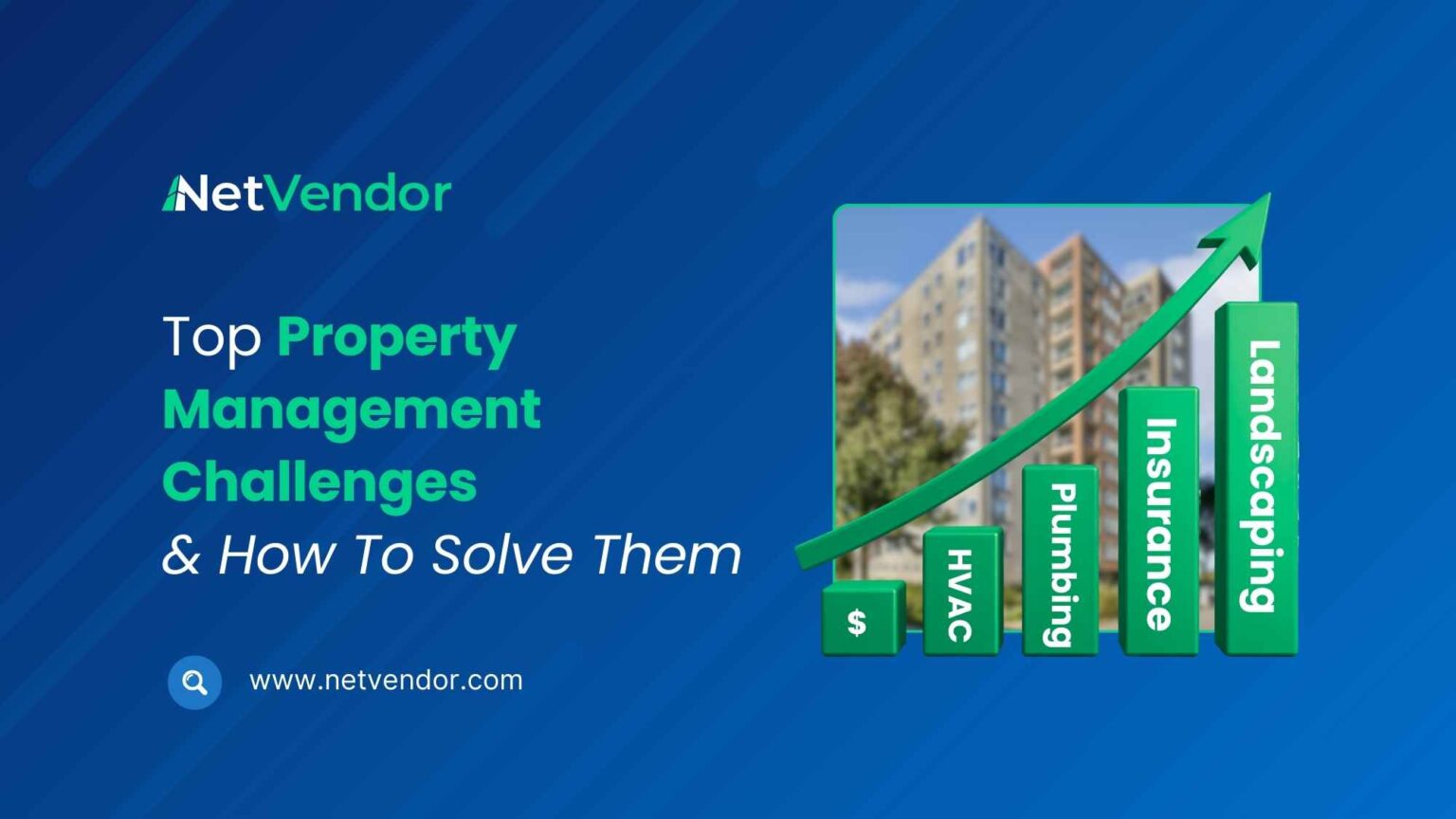
Costs for landscaping, HVAC, plumbing, electrical, cleaning, inspections, and contract labor continue to rise. At the same time, rent growth varies widely by market, leaving property management companies with limited room to absorb cost increases without affecting NOI.
Why Is Cost Control So Hard Across a Property Management Portfolio?
Cost control breaks when vendor usage varies by property, approvals rely on manual processes, and spend data is fragmented across systems.
These workflow gaps quietly increase spend through rework, delayed approvals, emergency jobs, and inconsistent vendor performance. Over time, small inefficiencies compound, making budgets harder to forecast and margins harder to protect. Without centralized control, even high-performing properties struggle to maintain consistent margins across a portfolio.
How Do Cost Pressures Differ By Property Type?
While cost pressure is universal, the operational triggers behind it differ by property type. These pressures show up across every vertical, but the triggers vary:
- Multifamily: Recurring services and turns drive ongoing vendor volume
- Student housing: Compressed seasonal timelines intensify vendor demand
- Commercial: Tenant improvements and specialized trades inflate costs
- Senior living: Regulatory requirements raise operational overhead
- Storage: Maintenance and security expenses stretch lean teams

Cost Control Improves When Vendor And Approval Workflows Are Standardized
PMCs regain control over operating costs by standardizing how work is initiated, approved, and completed, rather than by cutting vendors. Standardization reduces variability, which is one of the biggest hidden drivers of cost overruns.
When vendor qualification, work authorization, and job completion follow consistent workflows across properties, spending becomes more predictable. PMCs gain clearer insight into pricing patterns, scope changes, and regional variance, making it easier to identify issues early and reduce reliance on high-cost, reactive work.
Effective strategies include:
- Standardized vendor networks across regions to reduce pricing volatility
- Competitive bidding within approved vendor pools to improve scope clarity and enforce pricing consistency across the portfolio
- Connecting compliance, maintenance, and approval workflows to eliminate rework
NetVendor enables controlled vendor bidding within a standardized lifecycle, ensuring every job is competitively priced, properly scoped, and compliant before work begins.
Separate systems for compliance, maintenance, approvals, and vendor data make it difficult to achieve consistency.
How Does Standardization Improve Budget Forecasting In Property Management?
When vendor qualification, work authorization, and job completion are part of the same operational lifecycle, spending becomes more predictable and easier to forecast. You can compare pricing patterns across regions, identify scope creep earlier, and reduce emergency work that carries premium costs.
Technology built specifically for property operations supports this approach. NetVendor enforces vendor lifecycle control by connecting compliance, onboarding, bidding, and maintenance workflows into a single operational system.
Rising costs are often the first visible symptom of deeper operational friction. These same workflow weaknesses surface even faster when teams face limited vendor availability, especially if onboarding, compliance, and activation processes aren’t built for speed or scale.

Vendor Shortages Create Operational Risk for Property Management Teams
Vendor shortages are among the most disruptive property management challenges because they directly affect maintenance execution, unit turns, and resident satisfaction.
Skilled trades such as HVAC, electrical, plumbing, and make-ready services face ongoing labor constraints, particularly in high-growth markets. When vendor availability tightens, even well-staffed onsite teams are forced to wait on external partners to complete critical work.
When a small group of vendors carries most of the workload, delays ripple through turn times, leasing timelines, and service levels. In tight labor markets, speed of vendor activation becomes a competitive advantage.
Vendor shortages are often misdiagnosed as labor problems. In reality, they are activation problems caused by slow onboarding, unclear compliance requirements, and fragmented vendor management systems.
How Do Vendor Shortages Impact Maintenance, Unit Turns, and Residents?
Vendor shortages expose weak points in maintenance workflows. When demand spikes and vendor capacity is limited, work orders stall, turns slip, and resident frustration rises.
Without a flexible vendor bench, a single delayed trade can hold an entire unit turn hostage. Leasing timelines shift, move-ins are pushed back, and onsite teams are left managing expectations without the tools to accelerate resolution.
What Slows Vendor Onboarding and Limits Vendor Availability?
Vendor availability is often limited not by sourcing but by activation. When onboarding is manual, compliance requirements are unclear, or documentation is handled inconsistently, PMCs struggle to bring new vendors online quickly. In many cases, vendors are available but stuck in onboarding or compliance bottlenecks.
These delays create hidden backlogs. Vendors exist, but they can’t be used. The result is longer repair timelines, missed leasing windows, and increased reliance on overextended preferred partners.

Strong Vendor Networks Depend on Simplicity and Trust
Vendor networks strengthen when onboarding, compliance, and access to work are simple, consistent, and fast.
Vendor-friendly workflows improve coverage by increasing both speed and retention. Key practices include:
- Vendor-first onboarding experiences that reduce confusion and speed activation
- Automated compliance collection that communicates directly with insurance agents
- Access to large, pre-vetted vendor ecosystems to expand coverage quickly
Why Vendor-Friendly Technology Improves PMC Performance
Empowering vendors with intuitive, consistent workflows directly improves property management performance. Quick vendor onboarding, clear expectations, and consistent compliance allow work to move faster and more reliably.
This alignment strengthens vendor networks across all property types, reducing delays, improving execution during peak periods, and giving PMCs greater operational confidence when demand spikes.
Vendor shortages, rising costs, and slow maintenance cycles are not separate problems. They are connected through how vendors are onboarded, approved, and activated.
“A Practical Guide to Solving Property Management Challenges” shows how these breakdowns interconnect and where operational control is lost across the vendor lifecycle.

Vendor Compliance Is Not a Standalone Function
Compliance is not separate from vendor management. It is the control mechanism that determines whether vendors can operate, get paid, and remain active across a portfolio.
Compliance Complexity Is Increasing Across Property Management Portfolios
Compliance has become one of the most complex challenges in property management as portfolios grow and ownership structures diversify.
Insurance requirements vary by ownership group, jurisdiction, property type, and service category. Coverage limits, additional insured language, and documentation standards change frequently, making it difficult for property management teams to apply requirements consistently across vendors and properties.
As complexity increases, so does risk. A single compliance gap can sideline a vendor during a critical turn, delay a project, or expose a property to liability during an incident.
Why Are Vendor Compliance Requirements So Difficult to Manage at Scale?
As portfolios expand across regions and ownership groups, compliance requirements multiply. Different service types require different coverage. Owners impose unique standards. Jurisdictions add local rules.
Manually managing this complexity pushes teams toward spreadsheets, shared drives, and individual follow-ups—tools that can’t scale or adapt as requirements change.
What Happens When Vendor Compliance Is Tracked Manually?
Manual compliance tracking cannot keep pace with the portfolio’s complexity. Spreadsheets and shared folders introduce blind spots that expose property management companies to liability, audit risk, and operational delays.
A single expired COI can sideline a vendor during a critical make-ready window or create exposure during an incident, turning a documentation issue into an operational and financial one.

Automated Compliance Reduces Risk Across Property Management Portfolios
Property management companies that stay ahead of compliance risk rely on automated, configurable systems that adapt to portfolio complexity instead of adding manual oversight.
Automation applies requirements consistently by vendor type, property, and ownership group while keeping documentation current and visible across the portfolio.
Effective compliance automation reduces risk without increasing administrative workload. Strategies include:
- Direct-to-agent certificate collection to eliminate manual follow-up
- Configurable rules by vendor type, property, and ownership group
- Real-time compliance reporting integrated with PMS platforms
How Does Compliance Automation Support Audit Readiness?
Compliance automation improves audit readiness by keeping documentation current, reducing human error, and making compliance status visible at any moment, not just during audits.
Instead of chasing certificates and reconciling spreadsheets, teams gain confidence that vendors are compliant, requirements are met, and records are readily available when needed.
NetVendor automates credentialing and insurance tracking, ensuring requirements remain up to date across large, distributed portfolios. When compliance is embedded directly into operational workflows, risk decreases without increasing administrative workload.
Compliance gaps don’t just increase risk; they slow execution. When vendors are sidelined due to expired documentation, maintenance workflows stall, unit turns drag on, and vacancy loss increases.
What Is Compliance-Led Vendor Management?
Compliance-Led Vendor Management is a model in which vendor lifecycle control is enforced through compliance requirements embedded across onboarding, activation, and execution workflows.
Instead of treating compliance as a checkpoint, it becomes the system governing vendor participation, reducing risk, and ensuring consistent execution across the portfolio.

Slow Unit Turns Reveal Broken Maintenance Workflows
Slow unit turns directly impact NOI and are rarely a staffing issue. They are coordination failures caused by disconnected vendor workflows and a lack of real-time lifecycle visibility. When maintenance teams, vendors, and property staff are not aligned on scope, sequencing, and timelines, small delays compound quickly into vacancy loss.
The problem isn’t effort; it’s coordination. When turn activity is managed across disconnected tools and informal communication, work falls out of sequence, and accountability becomes unclear. Common causes include:
- Work that falls out of sequence between trades
- Unclear scope that leads to rework
- Vendor scheduling that is not tied to turn timelines
- Limited visibility into what is blocked and why
How Do Vendor Shortages Make Unit Turns Worse?
Labor shortages amplify existing coordination issues. Without a flexible vendor bench and turn schedules tied directly to availability, a single delayed trade can stall the entire process and push move-in dates.

Maintenance Efficiency Improves With Shared, Real-Time Workflows
PMCs that consistently shorten unit turns focus on coordination rather than adding headcount. The biggest gains come from aligning internal teams and vendors around the same real-time view of priorities, schedules, and unit turn coordination.
Successful strategies include:
- Mobile-first tools that help technicians complete work efficiently
- Vendor-enabled turn workflows that expand capacity during peak periods
- Digital make-ready boards that align schedules and responsibilities in real time
Why Do Digital Make-Ready Boards Reduce Vacancy Loss?
Digital boards reduce vacancy loss because everyone sees the same priorities, timelines, and blockers. Work stays sequenced, responsibilities are clear, and vendors can be scheduled proactively rather than reactively.
NetVendor connects vendor coordination, scheduling, and execution workflows within a single lifecycle system, reducing delays and improving turn performance.

System Fragmentation Limits Portfolio Visibility And Decision-Making
Fragmented systems break vendor lifecycle continuity, forcing teams to manage sourcing, compliance, and execution separately instead of as a single operational flow.
When vendor management, compliance tracking, maintenance activity, and reporting live across disconnected platforms, leadership loses clear visibility into performance. Leaders make reactive rather than proactive decisions, and issues surface only after they affect service levels, budgets, or resident satisfaction. This is a common inflection point in growing portfolios and a core driver of operational efficiency breakdown in scaling property management portfolios.
Why Do Disconnected Systems Create Operational Blind Spots?
Spreading data across multiple systems prevents any single team from seeing vendor performance, compliance status, or maintenance progress. Updates arrive late, reporting becomes inconsistent, and leaders must piece together information from multiple sources, allowing operational bottlenecks to stay hidden until they escalate into missed turns, budget overruns, or service failures.
What Are The Signs Your Property Management Workflows Are Fragmented?
Common signs include:
- Different vendor processes by property or region
- Compliance status stored outside operational systems
- Maintenance updates split across texts, emails, and spreadsheets
- Inconsistent reporting that prevents apples-to-apples comparisons

Unified Platforms Restore Operational Confidence
Operational control is restored when vendor lifecycle management is unified. Connecting sourcing, onboarding, compliance, and execution into a single system eliminates fragmentation and restores portfolio-level visibility.
Unified platforms give leadership clearer insight into what’s happening across the portfolio and the confidence to make faster, more informed decisions. Unified platforms provide:
- Deep integrations with major PMS systems
- Centralized vendor lifecycle management from sourcing through settlement
- Transparent reporting that supports faster, more confident decisions
How Do Integrations Improve Property Management Reporting?
Integrations reduce double entry and keep vendor, work order, and compliance data aligned across systems. This alignment supports more accurate, consistent reporting on spend, vendor performance, and turnaround times across properties and regions. With cleaner data, leadership teams can identify trends earlier and address issues before they impact operations or financial performance.
As visibility improves, the next challenge becomes capacity.

Doing More With Less Requires Automation And Standardization
Property management teams now support larger portfolios with fewer resources, increasing operational strain across vendors, maintenance, and compliance workflows.
Without automation and standardization, administrative work grows faster than headcount, forcing teams to spend more time on task management and less time improving operations.
How Can PMCs Improve Efficiency Without Adding Headcount?
PMCs improve efficiency by removing manual work from everyday operations. Automation absorbs repetitive tasks, standardizes processes across properties, and reduces the need for constant follow-up between teams and vendors. When automated systems handle routine coordination, teams can focus on resident experience, vendor relationships, and higher-value operational decisions.
Together, these challenges reveal a common pattern in modern property management operations. The questions below address how PMCs are navigating these pressures and where workflow improvements deliver the most impact.

Frequently Asked Questions About Property Management Challenges
What Are The Most Common Property Management Challenges Today?
The most common property management challenges include rising operating costs, vendor shortages, complex compliance requirements, slow unit turns, and limited portfolio visibility due to disconnected systems.
What Is the Root Cause of Most Property Management Challenges?
The root cause of most property management challenges is lack of vendor lifecycle control. When onboarding, compliance, and execution workflows are disconnected, costs rise, vendors disengage, and operational delays increase across the portfolio.
Why Do Vendor Shortages Impact Property Management Operations So Heavily?
Vendor shortages impact operations because work cannot proceed without licensed, compliant vendors. When onboarding and compliance workflows are slow or inconsistent, PMCs struggle to quickly activate new vendors during demand spikes, leading to delayed turns, missed leasing windows, and resident dissatisfaction.
How Does Compliance Automation Reduce Risk For Property Management Companies?
Compliance automation ensures that vendors consistently meet insurance requirements across properties, minimizes human error, and keeps documentation audit-ready at all times. This prevents coverage gaps that can delay work or expose properties to liability.
What Improves Unit Turn Efficiency The Most In Multifamily Operations?
Unit turn efficiency improves most when maintenance teams and vendors coordinate through shared, real-time workflows. Clear sequencing, visibility into blockers, and vendor scheduling aligned to turn timelines reduce delays and vacancy loss.
How Do Unified Platforms Improve Property Management Performance?
Unified platforms improve performance by centralizing vendor, compliance, maintenance, and reporting data in a single location. This reduces manual work, improves visibility across the portfolio, and enables faster, more confident decision-making.

How Property Management Companies Can Solve Today’s Operational Challenges
Property management challenges rarely occur in isolation. How work moves across vendors, teams, and systems drives rising operating costs, vendor shortages, compliance risk, slow unit turns, and limited portfolio visibility.
High-performing portfolios don’t fix issues individually. They control how vendors are onboarded, approved, and managed across the entire lifecycle.
NetVendor enforces vendor lifecycle control by connecting onboarding, compliance, bidding, and execution into a single operational system, giving leadership consistent visibility, faster execution, and reduced portfolio risk.
Organizations that adopt Compliance-Led Vendor Management reduce risk, improve execution speed, and regain control over portfolio performance by managing vendors as a continuous lifecycle rather than disconnected tasks.
Download “A Practical Guide to Solving Property Management Challenges” to identify where your workflows are breaking down, where risk is entering your portfolio, and how to restore operational control at scale.
NetVendor is the platform property managers trust to reduce risk, grow reliable vendor networks, and keep operations running smoothly. From compliance and credentialing to maintenance and bidding, NetVendor connects PMCs and vendors in one system that integrates directly with all the major PMS systems. Backed by the industry’s leading vendor ecosystem, NetVendor is how property managers ensure every vendor is compliant, reliable, and ready to perform.